WATER DAMAGE
The king tide flooded the garage at 6 AM. The first company that answers gets the job
Every fall, the highest tides of the year come to South Florida. On some mornings the sky is clear, and the street is under water. Salt water comes up through the drains and into the garage. The owner wakes up, sees it, and starts calling. It is 6 AM. Your office opens at 8.

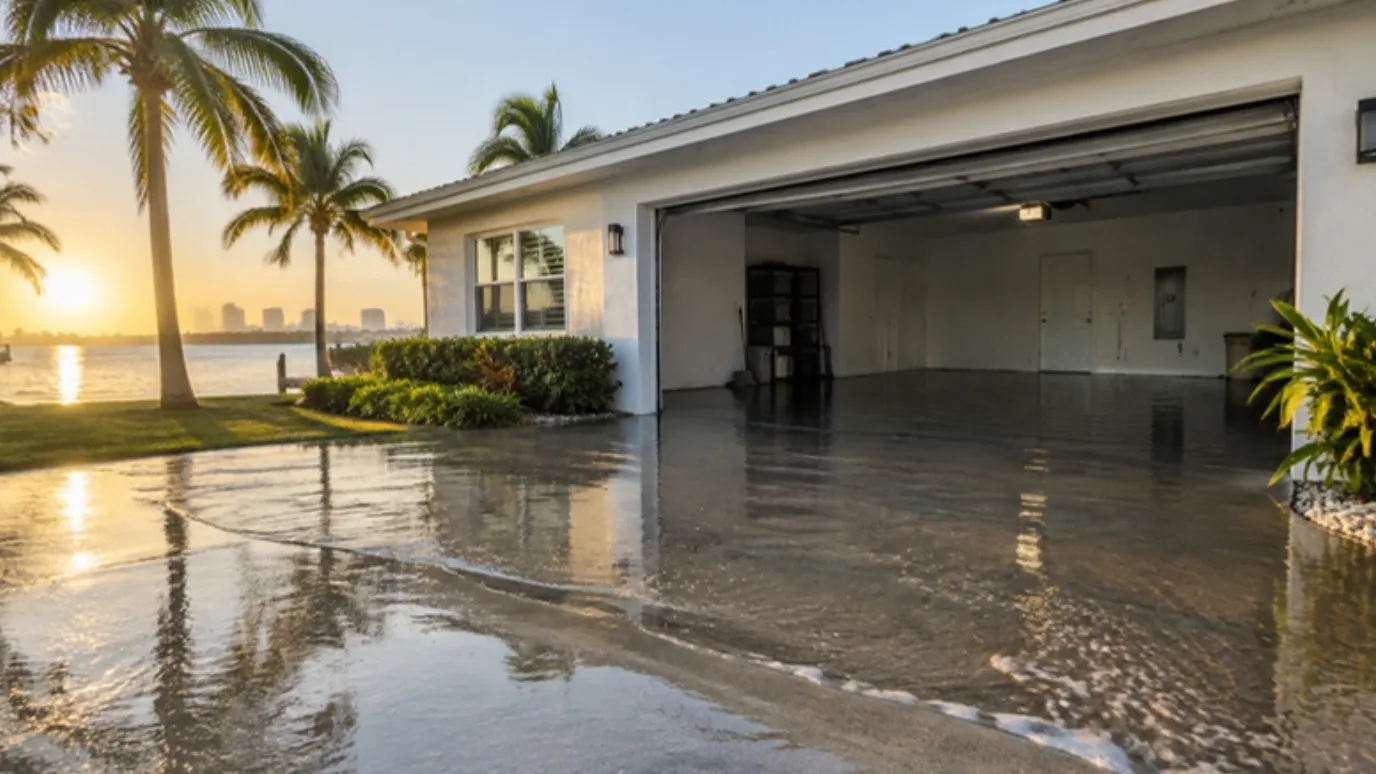
A note on what this is. This post is about the call, not the drying. It covers what a phone should ask when water is in the house, and what it should never say.
THE SHORT ANSWER
Why do king tide calls come so early?
The tide does not keep office hours. The high tide can peak at dawn, and that is when people see the water. A garage floor that was dry at night is wet at sunrise.
The owner does not wait. They search for water damage near them and call the first name. If it rings out, they call the second. By 8 AM, the job has a company, and it may not be yours.
How do you know if you miss these calls?
Look it up on your own phone. Find the tide tables for your area for last fall. Mark the mornings with the highest tides. Then open your call log for those same mornings and count the calls between 5 and 8 AM. Count how many you answered. That gap is your number, and nobody else has it.
What should the phone take down?
- The address, with the unit number if it is a condo or an apartment.
- Where the water is: the garage, the ground floor, one room, or the whole floor.
- Whether the water is still coming in, or has started to go down.
- Photos by text: the floor, the walls near the floor, anything on the floor.
- Who is calling: the owner, a tenant, or a family member for an owner.
- The language they want, and the best number to call back.
That is enough to send the right crew with the right gear. It is also enough for a person on your team to call back with a plan.
What must the phone never do?
Never give safety advice. The caller may ask if it is safe to turn on the lights, or to walk in the water. Nobody on the phone can see that. The answer is always that a person will call back right away. If someone is in danger, the caller should call 911. If power or wiring is a worry, a licensed electrician or the power company should look at it.
Never quote the job. Nobody knows the size of it until a crew sees it. And never talk about insurance. Many insurers treat water from outside in a different way than a burst pipe. That is between the owner and their insurer.
Book the visit, take the details, hand off the hard questions. That is the whole job of the first call.
Where does a voice agent fit?
If someone on your team already answers at 6 AM, you do not need one. Keep doing what works. If nobody does, the AI voice agent on the Crew plan answers 24/7 and offers English or Spanish. It asks the questions above, asks for photos by text, and books a real open slot on your calendar. It does not quote, and it does not give safety advice. When a caller asks about safety, it hands off to a person, on the rules you set.
The language the caller picks is saved. Every later text, from the visit time to the drying updates, goes out in that language.
Related
Counted the high tide mornings?
Bring the count to a 30-minute call. We will look at those early hours with you, show you the questions the voice agent asks, and set the hand-off rules. If your team already answers, we will tell you that you are covered.